The dances
Hula, sasa and siva decoded
Hula kahiko and ʻauana, the seated Samoan sasa, the graceful siva and the fire knife: what each dance is and how to tell them apart from your table.
Book the luau ↗Quick answer
Hula is Hawaiian: kahiko is the older style, danced to chant and drums, and ʻauana is the newer one, sung with guitar and ʻukulele. The rest of the dances at a Polynesian show come from other islands. Sasa is a Samoan group dance of fast claps, usually performed seated; siva is the graceful Samoan dance whose finest form is the taualuga; and siva afi is the Samoan fire-knife dance. Each tells something different, so each is worth watching for.
Hula tells a story
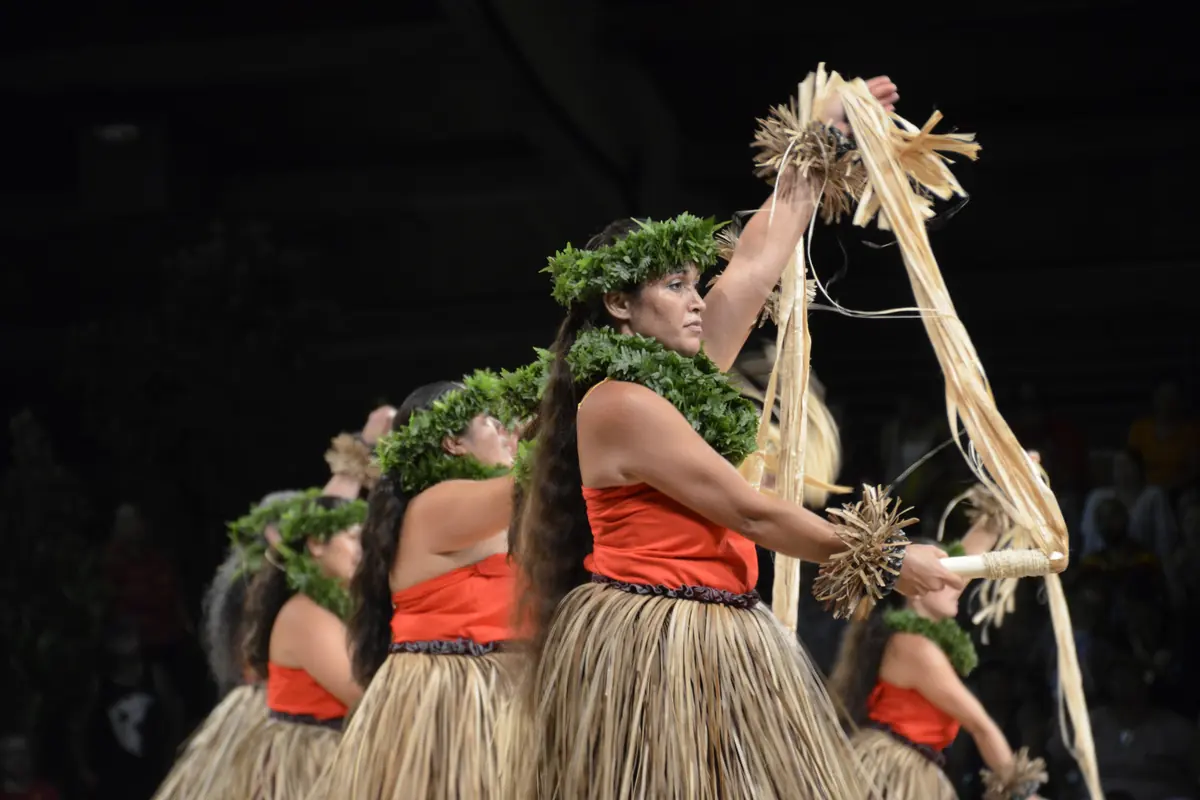
Hula is a Hawaiian dance that expresses mele, a song or chant. The dancer's hands carry most of the meaning: a movement can stand for a tree swaying in the breeze, a wave in the ocean, or a feeling such as fondness or longing. The feet and hips draw on a basic library of steps with Hawaiian names. Hula can be danced seated or standing. Other islands have related dances, from Tahiti to Tonga and New Zealand, but hula itself belongs to Hawaiʻi. Watching the hands, rather than the hips, is the quickest way into what a hula is saying.
Kahiko: the old style
Hula kahiko is the form danced before Western contact. It is performed to chant and traditional instruments, among them the gourd drum called ipu and the sacred pahu, whose head is sharkskin. Many kahiko were composed to honour a god, a goddess or a chief, and the style tends to be austere, with traditional costume such as the wrapped pāʻū skirt. American Protestant missionaries who arrived in 1820 denounced hula, and in 1830 Queen Kaʻahumanu forbade public performances. The arts revived under King Kalākaua, who reigned from 1874 to 1891 and encouraged them.
ʻAuana: the newer style
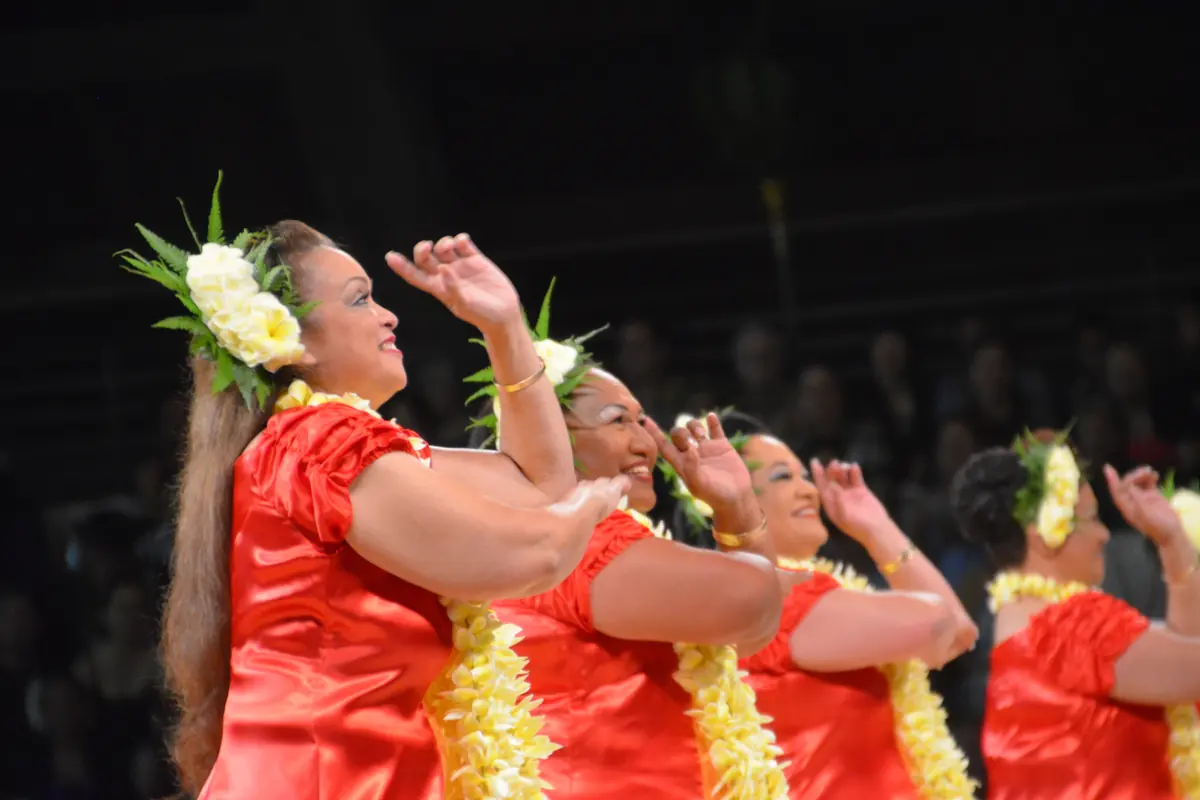
Hula ʻauana grew from the meeting of hula with Western music and Christian morality in the 19th and 20th centuries. ʻAuana translates as drifting. The songs are sung rather than chanted, usually by a lead voice in a major key, on strings that travel easily: guitar, ʻukulele, double bass. Costumes are more Western-looking, often dresses for women, and the subjects can be anything: people, places, events, or simply a feeling. If a dance at the luau comes with a sweet melody and flowers in the hair, it belongs to this family.
Sasa: Samoa's seated rhythm
Sasa is a Samoan folk dance performed by people of all ages, usually in groups and usually seated, although parts may call for standing. The word means to strike, and the dance is built on precise, rhythmic claps and quick hand movements. Each gesture shows something from Samoan life, from fish moving in the water to cooking, cleaning or paddling a canoe, and the more dancers move as one, the stronger the effect. A sasa begins with the leader calling tulolo, which tells the group to bow their heads. Watch for the moment the whole line changes direction together.
Siva and the taualuga
Siva Samoa simply means Samoan dance, and its traditional form asks for grace, with the arms and hands moving subtly and gently. The most celebrated siva is the taualuga, considered the apex of Samoan performance. Its name comes from the last stage of building a house, when the topmost rafter is secured, and so it signals completion: it is often the grand finale of an evening or the last dance at a wedding. Tradition gave it to a chief's child, who danced it wrapped in a finely woven mat tied with a tapa sash.
Siva afi: the fire knife
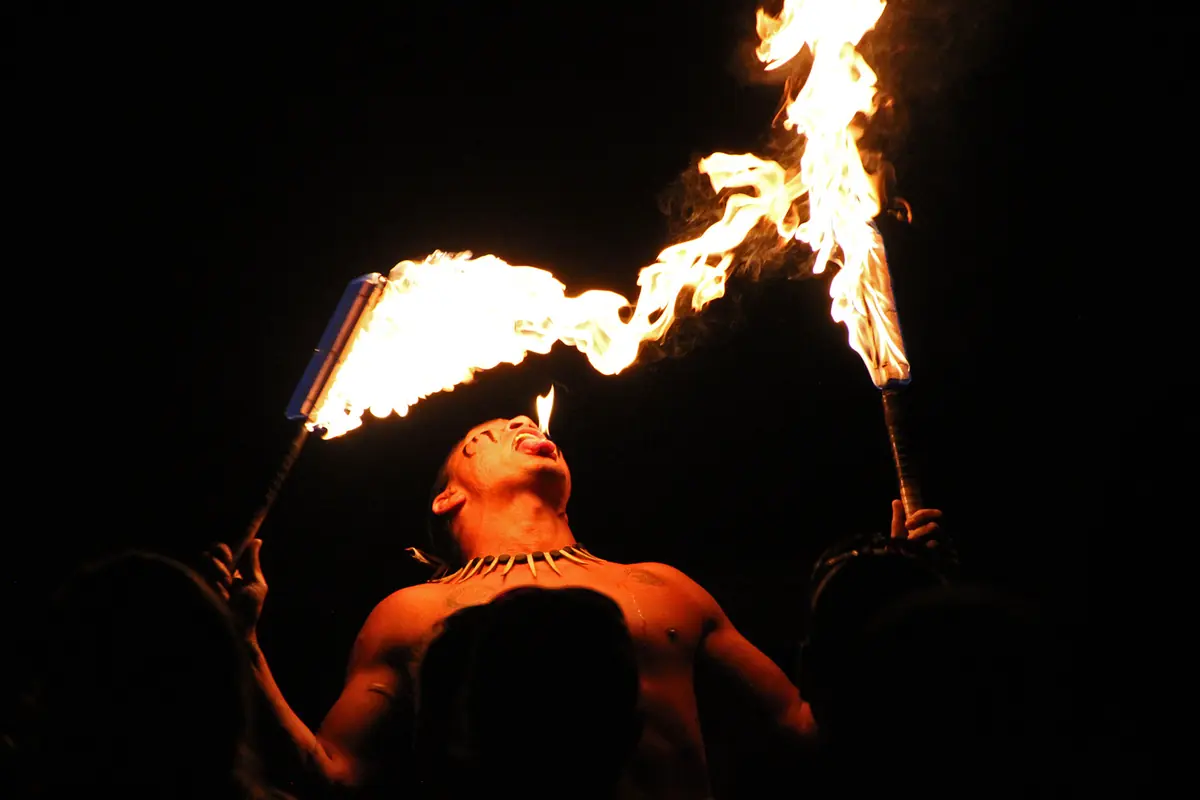
The fire-knife dance is the Samoan art that closes the Daytona show. Its root is the ailao, where a warrior twirled a war club, threw it and caught it to show his skill, and the earliest fire knives were machetes with towels wrapped round both ends and lit. A dancer may use one knife or as many as four. A world fire-knife championship has been held every year since 1992, in the third week of May, and shows in Tahiti, Tonga and Fiji have taken it up too.
Telling them apart at the table
Three questions sort most of what you will see. Is the music chanted with drums, or sung with strings? Chant and drum suggest hula kahiko, song and ʻukulele suggest ʻauana. Are the dancers seated and clapping in tight unison? That is likely a sasa. Is one dancer moving slowly with flowing arms while others watch? Think siva. Then the lights drop and the knife catches fire, and there is no doubt left. Which dances you get on your evening is the performers' call, so treat this as a key for reading the stage rather than a programme.
Sources