Start here
Daytona luau: worth it?
Two hours at the Daytona Beach luau: what is included, what costs extra, where the fire-knife finale fits, and who should pick a different evening.
Book the luau ↗Quick answer
Yes, for families, couples and groups who want one relaxed evening of island food and Polynesian dance without much planning. The ticket covers about two hours indoors in Daytona Beach: a lei greeting, a dinner of island dishes, water, tea and soft drinks, parking, and a show of chants, live music and hula that ends with a Samoan fire-knife dance. Alcohol, photos and souvenirs cost extra, and cancelling at least 24 hours ahead costs nothing.
What the ticket buys, and what it doesn't
| In the ticket? | |
|---|---|
| Dinner of island dishes | Yes |
| Water, tea and soft drinks | Yes |
| Lei greeting | Yes |
| Live show and fire knife | Yes |
| Parking | Yes |
| Beer, wine, cocktails | No, cash bar |
| Photos and souvenirs | No, on sale |
| Money back if you cancel | Yes, with 24 hours' notice |
The verdict in brief
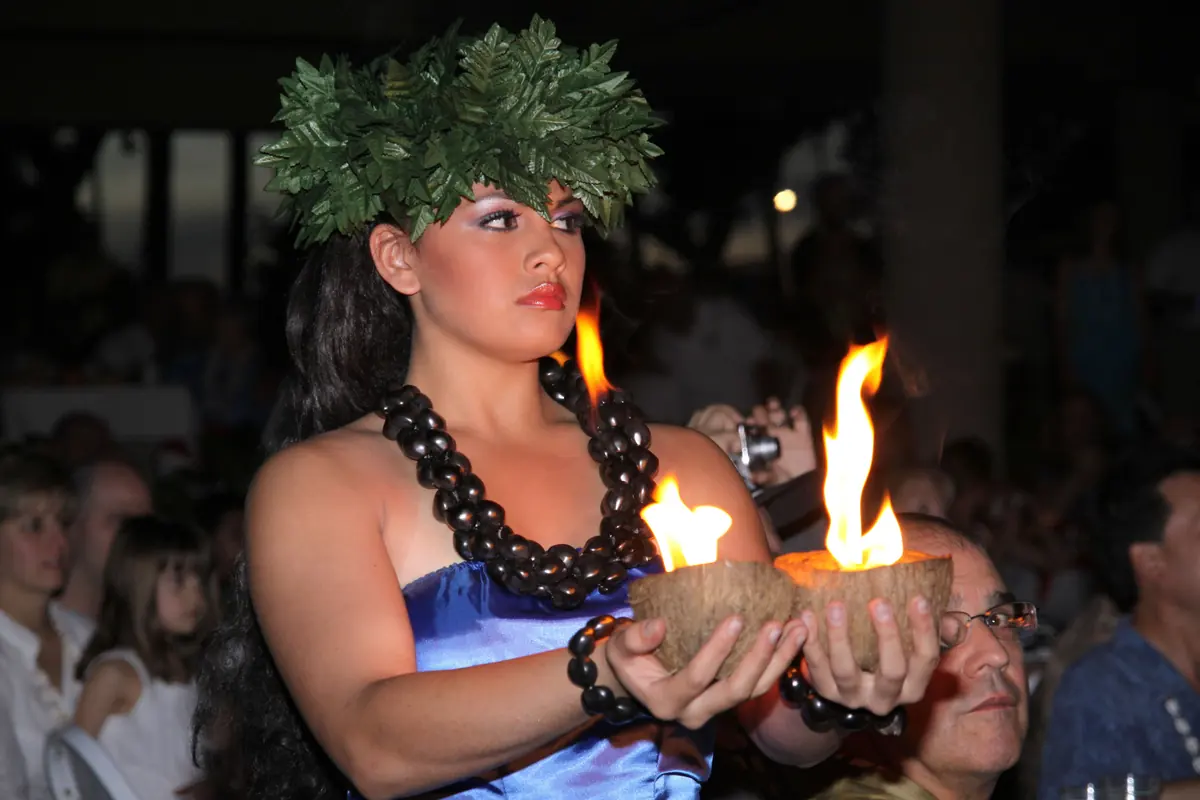
If you are in Daytona Beach with family or friends and want an evening that runs itself, book it. You park, you are greeted, you eat, and the show comes to your table. It suits first-timers to Polynesian dance, groups with children, and anyone who likes a meal and a performance in a single booking. It will disappoint people who pictured a luau on the sand, anyone who assumed the bar was part of the price, and anyone after a quiet dinner. What you pay for is the combination: a full meal, two hours of live performance with a fire finale, and the parking already settled. For a family, that single, known price is a large part of the appeal.
What the ticket covers
Five things are in the price. There is dinner, a spread of island dishes for the room, and there are water, tea and Coca-Cola soft drinks to go with it. There is the live show, and there is parking. The lei greeting at the door completes the list. Anything stronger to drink, from beer and wine to cocktails and premium soft drinks, is sold at a cash bar. Photographs of your party and souvenirs are for sale as well, and tips are not included. Knowing this before you go is the easiest way to keep the evening at the price you expected when you booked it. Carry a card or cash if you mean to visit the bar.
The food, without promises
Dinner is island cooking served for the whole room, and the menu changes from time to time, so any list of dishes you find online is a sample rather than a promise. Think of it as a buffet-style spread made for a full house, not plates cooked to order. Allergies or a special diet? Message the venue through your booking before the day, not at the door. The Hawaiian feast behind all this, with its earth oven, its taro and its rules about who ate with whom, is explained in this site's guide to luau customs.
Read next: Lei, ʻawa and imu explained
What happens on stage
On stage is one Samoan family, originally from Nuʻuuli on Tutuila. Their show mixes warrior chants, live music and hula with dances from several Polynesian islands, under low ambient lighting. A host acts as master of ceremonies, introducing each part and drawing a few guests into the action. The numbers change from night to night and no set list is published, so the order is the performers' choice. In hula the hands act out the words of the song or chant, so watch them as closely as the feet, while Samoan group dances such as the sasa are built on sharp, exact claps. If you would like to tell a hula kahiko from a Samoan sasa while you watch, the dance guide on this site explains each one.
Read next: Hula, sasa and siva decoded
Who the performers are
The family behind the show comes from Nuʻuuli, a village on the central east coast of Tutuila. Tutuila is American Samoa's biggest island and holds most of its people, a United States territory in the South Pacific some 2,200 miles southwest of Hawaiʻi, and it is home to the territory's capital, Pago Pago. Nuʻuuli is the second most populous village in American Samoa; the name means, roughly, black land, and it holds the largest mangrove swamp on the island. That background explains the shape of the evening: a Hawaiian-style feast and hula, carried by a Samoan family, closing with the dance their own islands gave the Polynesian stage.
The fire-knife finale
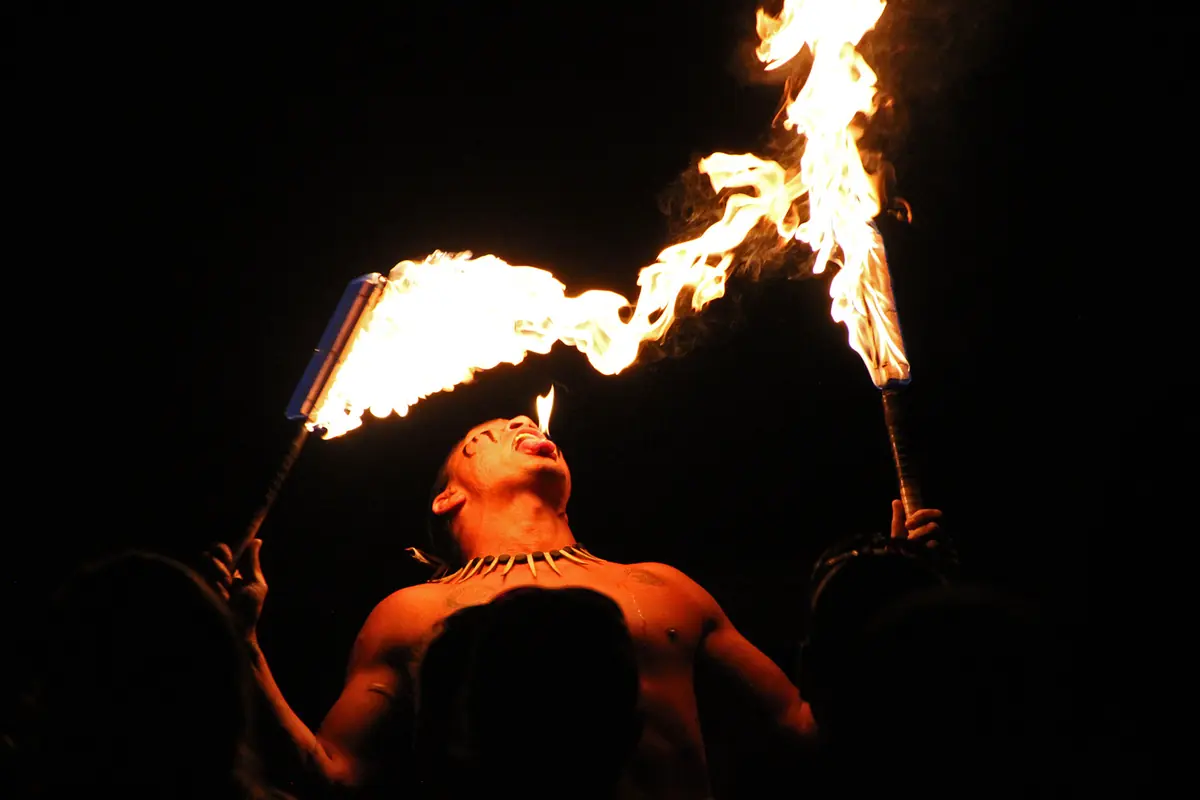
Last comes siva afi, the Samoan fire knife. The dancer spins, throws and catches a knife whose ends are burning, a modern form of the ailao, the old warrior's display with a war club. The first fire knives were machetes wrapped in towels at both ends and set alight. It is the loudest and brightest part of the evening and it comes last, so stay in your seat through dessert, and watch the dancer's hands as much as the flames, because the control is the skill. The dance has its own world championship, held every year since 1992, and it is now part of Polynesian shows on many islands, which is why it closes this one.
Indoors, not on the beach
Daytona Beach is known for its sand, so it is natural to picture a luau by the sea. This one is an indoor dinner show. That has its advantages. The area's warmer season, from late May through October, is also its wetter one, and an indoor room does not depend on the weather. You will not hear the surf, though. If you want the ocean in your evening, walk the beach or the boardwalk in the afternoon, then drive to dinner and let the luau be about the food and the dancing. The guide to a Daytona day on this site suggests how to fill the hours before.
Timing and length
Plan on about two hours from the lei to the last flame. Start times move from date to date, so read yours off the calendar and your confirmation, never from a time picked up elsewhere. Arrive with a little time to spare: the greeting at the door is the first moment of the show, and finding your table and ordering a drink takes a few minutes. Because the evening finishes with the fire knife, leaving early means missing the part the whole night builds towards, so plan any onward driving around the end of the show. If you are coming from Orlando, read the getting-there guide first, because traffic on Interstate 4 can decide whether you are in your seat for the lei.
Children and families
This is a family evening by design. The host keeps the tone light, a few guests are pulled into the fun, and because dinner and soft drinks are in the ticket, the only extra bills are the bar, the photos and the souvenirs. Children who have never seen hula get a gentle introduction to it, and the fire knife gives older ones something to talk about on the drive back. Look at the ticket types for your date in the calendar before booking. Wheelchair users are catered for: the venue is accessible, and seating needs can be noted in your booking.
Booking it well
Reserving now and paying later lets you hold seats for a whole family as soon as your dates are fixed, and a cancellation made 24 hours or more ahead costs nothing. Choose the date first, then look at the start time the calendar shows for it, and work the rest of the day around that. Book furthest ahead for the busiest weeks: during Bike Week in March and Biketoberfest, Wikipedia records several hundred thousand riders visiting the greater Daytona Beach area, so book early for those weeks. Race weeks at the speedway, whose grandstands hold 101,500 permanent seats, bring crowds as well. Keep your confirmation on your phone for the address.
Who this isn't for
Look elsewhere for a hushed dinner for two, because the room is lively and the host talks to the crowd. Skip it if you are expecting a luau on the beach, an open bar, or a menu to order from. Skip it, too, if you want a strictly Hawaiian programme, because this show presents several island traditions and closes with a Samoan dance. And if you are staying in Orlando rather than on the coast, weigh the drive first: this site's comparison guide weighs the luau against a pirate dinner show in Orlando and explains which suits which trip.
Read next: Luau or Orlando dinner show?
Frequently asked questions
Is the Daytona Beach luau worth the money?
For most families, yes. Dinner, soft drinks, parking, a lei and a two-hour show come in one price. Budget separately for the bar, photographs and souvenirs.
Is alcohol included at the luau?
No. Beer, wine, cocktails and premium soft drinks are sold at a cash bar. Water, tea and Coca-Cola soft drinks are included.
Is the Daytona luau held outdoors?
No. The show runs inside, so rain or wind never decides the evening, and you watch from your table.
Who performs the Daytona luau?
Members of one Samoan family originating in Nuʻuuli, a village of Tutuila, together with live musicians and a master of ceremonies.
Can I cancel the luau booking?
Yes. With 24 hours' notice or more the refund is full, and the reserve-first, pay-later option lets you delay payment.
Is the luau venue accessible?
Yes, it is wheelchair accessible. Mention any seating needs through your booking before the day.
Sources